Minggu, 07 Agustus 2011

Posted by audleycordellleroipavoni on Agustus 07, 2011 in | No comments

Download PDF , by Sven Beckert

What do you do to begin reviewing , By Sven Beckert Searching guide that you like to check out initial or locate an interesting e-book , By Sven Beckert that will make you intend to review? Everyone has difference with their reason of checking out an e-book , By Sven Beckert Actuary, checking out behavior needs to be from earlier. Many individuals may be love to review, however not an e-book. It's not mistake. Somebody will certainly be burnt out to open up the thick publication with little words to read. In more, this is the genuine problem. So do take place possibly with this , By Sven Beckert

, by Sven Beckert

, by Sven Beckert


, by Sven Beckert


Download PDF , by Sven Beckert

Find a lot more experiences and also skills by reading , By Sven Beckert This publication comes to be a book that you actually require now, do not you? Are you still thinking that analysis is nonsense activity? Just how silly, when many individuals are beginning to discover several things, will you stay completely without any progression? This is just what you will do to be the much better individual?

Well, in relation to this trouble, what kind of publication do you require currently? This , By Sven Beckert It's truly wow! We are also including the collection of this book soft documents below. It is not example by coincidence. This is the outcome of your effort to constantly follow just what we offer. By discovering the book in this website it shows that we constantly give guides that you extremely require a lot.

Are you still confused why should be this book? After having fantastic job, you could not need something that is really hard. This is exactly what we claim as the practical book to review. It will certainly not just give amusement for you. It will give life lesson behind the amusing functions. From this case, it is undoubtedly that this publication is appropriate for you and for all individuals that need straightforward and fun publication to read.

Yes you're right; this book that is offered in this site remains in the soft documents. However, it does not suggest that it will certainly reduce the content of guide. It precisely includes the advantages. You could replicate the soft apply for your personal gadget as well as review it whenever you want. , By Sven Beckert is always being one of the suggested publications to review, by many individuals on the planet.

, by Sven Beckert

Product details

File Size: 61564 KB

Print Length: 632 pages

Publisher: Vintage; Reprint edition (December 2, 2014)

Publication Date: December 2, 2014

Language: English

ASIN: B00KAFVOUA

Text-to-Speech:

Enabled

P.when("jQuery", "a-popover", "ready").execute(function ($, popover) {

var $ttsPopover = $('#ttsPop');

popover.create($ttsPopover, {

"closeButton": "false",

"position": "triggerBottom",

"width": "256",

"popoverLabel": "Text-to-Speech Popover",

"closeButtonLabel": "Text-to-Speech Close Popover",

"content": '

' + "Text-to-Speech is available for the Kindle Fire HDX, Kindle Fire HD, Kindle Fire, Kindle Touch, Kindle Keyboard, Kindle (2nd generation), Kindle DX, Amazon Echo, Amazon Tap, and Echo Dot." + '
'

});

});

X-Ray:

Enabled

P.when("jQuery", "a-popover", "ready").execute(function ($, popover) {

var $xrayPopover = $('#xrayPop_F0C66C14438A11E994D389C0E0369786');

popover.create($xrayPopover, {

"closeButton": "false",

"position": "triggerBottom",

"width": "256",

"popoverLabel": "X-Ray Popover ",

"closeButtonLabel": "X-Ray Close Popover",

"content": '

' + "X-Ray is available on touch screen Kindle E-readers, Kindle Fire 2nd Generation and later, Kindle for iOS, and the latest version of Kindle for Android." + '
',

});

});

Word Wise: Enabled

Lending: Not Enabled

Screen Reader:

Supported

P.when("jQuery", "a-popover", "ready").execute(function ($, popover) {

var $screenReaderPopover = $('#screenReaderPopover');

popover.create($screenReaderPopover, {

"position": "triggerBottom",

"width": "500",

"content": '

' + "The text of this e-book can be read by popular screen readers. Descriptive text for images (known as “ALT text”) can be read using the Kindle for PC app and on Fire OS devices if the publisher has included it. If this e-book contains other types of non-text content (for example, some charts and math equations), that content will not currently be read by screen readers. Learn more" + '
',

"popoverLabel": "The text of this e-book can be read by popular screen readers. Descriptive text for images (known as “ALT text”) can be read using the Kindle for PC app if the publisher has included it. If this e-book contains other types of non-text content (for example, some charts and math equations), that content will not currently be read by screen readers.",

"closeButtonLabel": "Screen Reader Close Popover"

});

});

Enhanced Typesetting:

Enabled

P.when("jQuery", "a-popover", "ready").execute(function ($, popover) {

var $typesettingPopover = $('#typesettingPopover');

popover.create($typesettingPopover, {

"position": "triggerBottom",

"width": "256",

"content": '

' + "Enhanced typesetting improvements offer faster reading with less eye strain and beautiful page layouts, even at larger font sizes. Learn More" + '
',

"popoverLabel": "Enhanced Typesetting Popover",

"closeButtonLabel": "Enhanced Typesetting Close Popover"

});

});

Amazon Best Sellers Rank:

#63,446 Paid in Kindle Store (See Top 100 Paid in Kindle Store)

This is an academic treatment of how the modern industrial economy was born: heavy in detail, clear in analysis, if somewhat dry at times. While much of the ground has been covered elsewhere, the synthesis, breadth, and grand themes that emerge are unavailable in a single volume, to my knowledge. For me, it was a seminal reading experience, a necessary perspective that brought things together in a way that will influence my view of modern society for the rest of my life.The principal idea of the book is that the cotton industry, which represented the first step in the development of the modern industrial economy, was created by slavery and brutal and ever-more-efficient state coercion in cooperation with private capital. Global in scale, this convergence of factors would re-fashion the everyday lives of a majority of people on the planet - subordinating their working days to the rhythms of machines that replaced human muscle labor, opening the way to unprecedented prosperity for many, and enabling decisionmakers far from their homes to control the lives of people they will never meet.Beckert sees several steps in these developments. In the beginning, there was the development of "war capitalism". In a nutshell, this was the forcible appropriation of land and labor, with the cooperation of a primitive form of the state. While cotton had been in use for millenia, it was limited to small, very local, networks at this time. As demand grew and new forms of mechanized manufacture began to appear, war capitalism vastly increased the scale of cotton cultivation, employing slaves to undertake the backbreaking work of clearing the land and then the thankless task of harvesting the cotton - their utility was cheap labor that could be forced to work by any means necessary. Meanwhile, the state aided in the acquisition of land - because it exhausted the soil quickly, cotton cultivation required continual land appropriation - and the displacement or elimination of whomever was unfortunate enough to occupy that land, in most cases Amer-Indians. For their part, capitalist traders emerged in Manchester, a mercantile capital that gained tremendous market influence and political power to bring the state into alignment with their interests.The next phase opened with the invention of new means of production, in particular in the harnessing of chemical power in mills of ever-expanding scale and with elaborate forms of administrative innovation. At the same time, the state got involved with the protection and establishment of markets for their goods, both in supply but also for selling, i.e the distribution of goods. Industry was national and nationalistic. The natural culmination of this was the colonial enterprise. This was the second great legacy of the cotton empire: the de-industrialization and control of vast new territories. For example, the skills required for the production of the fine muslin of India were completely and forever destroyed. The native populations were subjugated to this order, fitting integrally into a hierarchy that exploited them while enriching captains of industry and politicians in colonial capitals. Meanwhile, manufacturing facilities became the source of massive employment, drawing people from the countryside to urban agglomerations that grew to then-incredible proportions.Furthermore, the state remained intimately involved in the development of the economy in the major colonial states, not only in the development of supporting infrastructure, but in the legal subjugation of workers for the protection of the evolving industrial practices. This was the crucial step in the virtuous circle that arose of self-reinforcing economic development, resulting in a far more intricate and complex industrial economy that emerged in the product cycles of related manufactures. It can only be described as a revolution that changed our lives so fundamentally that it is on a par with the neolithic revolution.Of particular interest is the evolution of the political economy of slavery. It was seen as a necessity for cotton production in the American South - a phenomenally profitable enterprise that created capital for further industrial investment that benefited all free Americans regardless of location - and as a crucial basic resource for all the new manufacturing powers. When the American Civil War began, it severely disrupted the world economy, based as it was on cotton, and the industrialized nations desperately sought to increase the supply of raw cotton. After that war, it was proven that low-wage sharecroppers could be counted on to produce cotton in a profitable way, supported as it was by state and private repression of the newly freed slaves. The colonial powers took note of this. In the US South, this arrangement was to survive for almost a full century, when automated cotton picking was finally perfected in the 1940s.The most recent phase of the industry is its globalization, a shift of manufacturing to the former colonies. The real power gravitated to transnational corporations - predominantly retailers like Walmart or Gap - that were no longer subject to coherent national legal jurisdictions, hence largely disconnected from nationalistic considerations. While this caused the precipitous decline of once-prosperous cities like Liverpool, it is part of the ebb of flow of 21C capitalism. Organizational innovation extended to the development of massive logistical networks to handle getting cotton to manufacturers and then distributing their low-cost products in developed nations at a hefty profit. As this is so new, it is the least developed portion of the book. I suspect it decisively locks Third World producers and manufacturers into a lower-value added position, where design and brand generate greater profits for transnational corporations and their shareholders that no longer need to worry about employees in their home base of operation.The implications of the book are of great interest and relevancy. First, it proves that the free classes all benefited directly and lastingly from slavery as an enabler of the first phase of industrialization. Without slaves (and subsequently share croppers or colonial serfs), both investment capital and the self-reinforcing and expanding product base of consumer capitalism would have accumulated far more slowly, perhaps over centuries rather than decades. This is the best argument for reparations that I have yet seen - the line from slavery and colonialism to prosperity for most of us is direct, while the descendants of slaves and serfs remain exploited and oppressed. Second, the state functioned as a crucial support for the development of private enterprise, from protecting nascent industries to enforcing laws that favored the manufacturing class. This flies in the face of neo-liberal ideology, which argues for a "free trade" that locks the developing world into an inferior status.This book is a wonderful intellectual adventure, its ideas are far more subtle than I could ever express here. It is a bit too academic for my taste, covering developments in exhaustive detail, but on the whole it is a page turner. Recommended with the greatest enthusiasm.

At the heart of Harvard history professor Sven Beckert’s award-winning book, “Empire of Cotton: A Global History,” is a simple but compelling syllogism: the wealthy, capitalist world we Americans live in today was created by the Industrial Revolution; the Industrial Revolution was driven by massive productivity gains in textile manufacturing; cotton was the essential raw ingredient that powered textile manufacturing. Thus, if it weren’t for cheap and plentiful supplies of raw cotton, the world we live in today might very well look quite different.The way Beckert tells the story, it seems to me, is that there have essentially been five major epochs in global cotton production and manufacturing.First, for most of world history, cotton was a locally produced and consumed commodity. Eastern Africa, South Asia (India, specifically), and Central America were the cradles of the early cotton industry, which Beckert writes developed independently, yet along similar lines as the raw cotton was processed and spun in close proximity to where it was grown, usually in individual households and by women.Second, over the course of centuries beginning around 1500, Europeans radically transformed the world of cotton through what Beckert calls “war capitalism”: a violent mixture of imperial expansion, slavery, and land expropriation. To start, Europeans captured the international trade network of Indian textiles from the overland Arab traders once sea routes were mapped and key coastal port cities dominated. Control of the transportation network then reinforced the system as African slave traders demanded Indian calicoes for their human chattel that were, in turn, required to work the sugar fields of the West Indies that generated massive wealth for the semi-private companies operating out of London and Continental Europe. The last piece of the cotton process puzzle to elude Europeans was manufacturing, primarily because they had no ready access to raw cotton and the labor costs of European workers were orders of magnitude greater than that of rural Indians.Third, and in this reviewer’s opinion the real heart of the story, is Europe’s rapid and shocking domination of textile manufacturing beginning in the 1790s, and the associated role of slavery in the American South in making that happen.The construction of Samuel Greg’s simple little factory, Quarry Bank Mill, on the Bollin River outside of Manchester, England in 1784 might have seemed unremarkable at the time, but it set in motion “the most important event in world history,” according to the celebrated (Marxist, it must be noted) historian Eric Hobsbwam: the Industrial Revolution. Beckert argues that war capitalism – that aforementioned combination of slavery, colonial domination, militarized trade, and land expropriations – provided the foundation for industrial capitalism, and the manufacturing of cotton would be the driving commodity behind its development. Indeed, Beckert writes, “industrial capitalism was the offspring of war capitalism, the previous centuries’ great innovation.”War capitalism had given England control over many nodes in the global cotton network, but manufacturing still eluded its grasp. The primary challenge was labor rates. The only way the British could hope to compete with the Indians who had dominated the market for centuries was through massive productivity gains leveraging new technology. British innovations like the flying shuttle (1733), spinning jenny (1760), water frame (1769), and mule (1779) combined to produce breathtaking efficiencies. For example, it took an estimated 50,000 man-hours to produce 100 lbs. of raw cotton in India in the 1750s. By 1790, water-powered British factories around Manchester had cut the time to 1,000 hours, and would drop to 300 hours by 1795.Beckert writes that cotton manufacturing “was the first major industry in human history that lacked locally produced raw materials.” As British manufacturing skyrocketed, so too did the demand for (and price of) raw cotton. The production methods of the traditional suppliers – India and the Ottomans – simply could not keep up. Manchester traders turned to the West Indies and their large slave plantations to pick up the slack, which were effective but constrained by limited available land for expansion into cotton, fierce competition from sugar farming, slave rebellions (Haiti had provided 24% of England’s cotton before the 1791 revolt), and eventually the war with France.As a result, cotton farming in the United States exploded in the years just after independence. Indeed, American cotton for export was almost unknown before the mid-1790s. Not only did the revolt in Haiti deprive the Manchester mills of raw material, it also dispersed experienced cotton plantation managers to the low country of the American South. Moreover, when Eli Whitney invented the cotton gin in 1793 it increased productivity with American Upland cotton by a factor of 50 virtually overnight.The combined results of these events was staggering. From 1.5 million pounds of cotton produced in 1790 (2% of total US export value), output jumped to 36.5 million pounds in 1800 and climbed to 167.5 million pounds (32% of total exports) by 1820. By the start of the Civil War cotton accounted for nearly two-thirds of total US export values. No wonder so many believed “King Cotton” might force England into an open military alliance with the Confederacy. After all, American cotton had fueled the export of British yarn from 350,000 pounds in 1794 to a staggering 200 MILLION pounds in 1860. Unlike other potential competitors, the United States possessed virtually limitless land (much of it expropriated from Native Americans), an abundance of slave labor, and the capital necessary for the development of large-scale agricultural operations. Plantation owners quickly emerged as “the world’s most important growers of the industrial age’s most important commodity”; the Mississippi Delta “a kind of Saudi Arabia of the early 19th century,” in one of Beckert’s many memorable phrases.Dependence on American cotton was worrying to manufacturers in England. What if the rapidly industrializing, fledgling republic across the Atlantic should decide to invest in cotton manufacturing themselves? Or cut favorable deals with continental competitors? Worst still, how much longer was slave labor politically tenable? In an effort to diversify the sources of supply, the British government attempted to build experimental, southern-style plantations in India, complete with American cotton farmer managers. Every attempt failed. Growing cotton, it seemed, was only viable with slave labor.It was during the fourth epoch in cotton history that this thesis was dramatically put to the test, a period I’d call “post-bellum cotton colonialism.” At the start of the U.S. Civil War, American cotton accounted for 75% to 90% of all European manufacturing needs. From 3.8 million bales of cotton in 1860, U.S. cotton exports to Europe fell to virtually zero two years later. Prices for raw cotton quadrupled. The world was gripped by a “cotton famine,” what Beckert suggests was “the world’s first truly global raw material crisis.” England turned again to India, this time with no alternative. By 1862, India was supplying 75% of England’s raw cotton, up from just 16% two years before. Brazilian and Egyptian cotton production also jumped. “The crisis of American slavery in effect forced and enabled the reconfiguration of the cotton growing countryside” all around the world is a way that previous attempts failed to produce. But these efforts were aided by highly inflated raw cotton prices. What would a world with cotton but without slavery ultimately look like?The global cotton network responded with remarkable vigor and success. Raw cotton, which traded for $0.11 per pound in 1860 and remained as high as $0.24 by 1870 dropped to $0.07 per pound by 1894, all while global consumption of cotton doubled. So how were such feats of agricultural productivity achieved without slave labor? According to Beckert, it was driven by a new, powerful imperial state in partnership with industry. Between 1876 and 1915, a quarter of the world’s land surface was carved up among the industrial powers. In the wake of slavery, and reaching deep inland across the cotton growing regions of the world, a new system of credit, private land ownership, contract law and industrial infrastructure projects (railroads, canals, telegraphs) bolstered harvest yields to new heights, even across the former Confederacy where sharecroppers clawed their way back so that by 1890 they were producing twice their pre-war records and reclaimed their dominant position supplying the British mills.“Cotton and colonial expansion went hand in hand,” Beckert writes. England in India and Egypt, Japan in Korea and China, Russia in Central Asia, and the United States in the Native American lands of the West all aggressively pushed cotton production to meet global demand while growing domestic textile industries. Between 1860 and 1920, 55 million acres (roughly the size of Minnesota) across the globe – from the German colony of Togo in West Africa to the vast steppes of Central Asia – were repurposed, often forcefully by the state, for cotton production. Powerful nation states, in league with industrial enterprises, “secured huge swaths of territory on which cotton could be grown and they their accumulated bureaucratic, infrastructural, and military might to mobile cotton growing labor,” often by recasting social arrangements similar to those used to foster the growth of industrial wage labor in the early days of the Industrial Revolution.But what about the processing of all that raw cotton into usable yarn and thread, not to mention the manufacturing of finished products, such as the mass production of inexpensive shirts and dresses? That required an entirely different type of labor: wage labor. “It is difficult to overstate the importance and revolutionary nature of this new organization of human labor,” Beckert writes. Mobilizing large numbers of workers, perhaps thousands, paying them fixed wages and then monitoring their work and effort was an entirely novel concept in the early nineteenth century.Finally, we are today living in a world of global, post-modern cotton. “The empire of cotton has continued to facilitate a great race to the bottom”… as “capitalism both demands and creates a state of permanent revolution.” A mere century ago, a typical, middle-class American’s cotton dress shirt would have been produced from a cotton boll grown in Mississippi, woven and spun into thread in a Massachusetts mill, and then sewn into the final product in a New York City workshop. Today, we (Americans) wear cotton shirts from fibers likely grown in Uzbekistan or Senegal, spun and woven into thread in China or Pakistan, and manufactured into our hip, “Casual Friday Appropriate”, GAP buttoned-down Oxford in Bangladesh or Vietnam.Beckert stresses that cotton production has exploded in growth while moving almost effortlessly to the lowest cost producer. In 1860, when the American South ruled with “King Cotton,” the territory of the former Confederacy produced a relatively astounding 5 million bales of cotton, the vast majority of the world’s supply at the time. Yet, by 2012, the heavily federally subsidized United States cotton growing industry (which received $35 billion in subsides between 1995 to 2010), mostly based in Texas and Arizona, produced over three times that amount, some 17 million bales of cotton, or just over 14% of the world’s production. Meanwhile, cotton growing and manufacturing has returned to its roots, such as China, whose factories today account nearly half of the world’s spindles and looms, and whose fields generate nearly a third of the global annual cotton crop (India, another pre-industrial cotton society, has also re-emerged as a leading producer, accounting for a fifth of global raw cotton production today). Cotton has been a globalized industry since at least the late 19th century, but today’s globalization is different in some remarkable ways, according to the author, namely that modern multinational corporations, such as Walmart or the French retailing giant Carrefour, are both enormously influential buyers of finished cotton goods and yet, unlike before, largely independent from any insurmountable coercive pressure from specific nation states.In sum, “Empire of Cotton” is a brilliant history of an indispensible commodity, easily on par with such classics as Daniel Yergin’s “The Prize” history of petroleum or Peter Bernstein’s “The Power of Gold.”

, by Sven Beckert PDF
, by Sven Beckert EPub
, by Sven Beckert Doc
, by Sven Beckert iBooks
, by Sven Beckert rtf
, by Sven Beckert Mobipocket
, by Sven Beckert Kindle
, by Sven Beckert PDF

, by Sven Beckert PDF

, by Sven Beckert PDF
Posted by audleycordellleroipavoni on Agustus 07, 2011 in | No comments

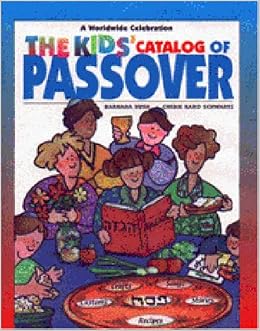
Free Ebook The Kids' Catalog of Passover, by Barbara Rush

We could not have the ability to make you love reading, but The Kids' Catalog Of Passover, By Barbara Rush will lead you to love reading starting from currently. Book is the window to open the brand-new world. The globe that you desire is in the far better stage and degree. Globe will constantly assist you to also the stature phase of the life. You understand, this is some of exactly how analysis will certainly provide you the generosity. In this instance, more books you learn more knowledge you understand, but it can suggest likewise the bore is complete.

The Kids' Catalog of Passover, by Barbara Rush

The Kids' Catalog of Passover, by Barbara Rush


The Kids' Catalog of Passover, by Barbara Rush


Free Ebook The Kids' Catalog of Passover, by Barbara Rush

Reviewing becomes more value as well as value in the life societies. It has the tendency to be more intricate. Every element that undergoes the life will certainly entail reading. Reviewing can be reading everything. In the way, market, collection, book shop, web resources, numerous will reveal you benefits when analysis. Nonetheless, it's more completed when book can be your favorite term to review. We will certainly share The Kids' Catalog Of Passover, By Barbara Rush that can make you fall in love to check out.

As known, we are the best book website that constantly provide numerous things of books from various countries. Certainly, you can locate as well as appreciate looking the title by search from the country as well as other countries on the planet. It suggests that you can think about lots of things while locate the interesting publication to review. Associated with the The Kids' Catalog Of Passover, By Barbara Rush that we get over currently, we are not doubt anymore. Many individuals have actually shown it; verify that this book offers excellent influences for you.

You may not envision exactly how words will certainly come sentence by sentence as well as bring a book to review by everybody. Its allegory as well as diction of the book selected actually inspire you to try writing a book. The inspirations will certainly go carefully and also normally during you read this The Kids' Catalog Of Passover, By Barbara Rush This is one of the impacts of just how the author can affect the visitors from each word written in the book. So this publication is very had to review, even detailed, it will be so beneficial for you and your life.

Loving this book suggests loving your hobby. Reading this book will certainly suggest leading life high quality to be much better. Much better in al thing may not be attained in other words time. Yet, this publication will help you to always boost the kindness as well as spirit of far better life. When locating the The Kids' Catalog Of Passover, By Barbara Rush to download and install, you might not overlook this. You need to get it now and read it quicker. Sooner you read this book, quicker you will certainly be a lot more success from previous! This is your option as well as we always think about it!

The Kids' Catalog of Passover, by Barbara Rush

From School Library Journal

Kindergarten-Grade 5-Truly a mixed bag, this book contains songs, stories, riddles, recipes, crafts, and other activities, some of which are quite unusual or innovative. Rush and Schwartz include information about the holiday's history and customs around the world and a well-done version of the Exodus story. Unfortunately, the folktales are uneven; some are quite interesting and well written, while others are precious or repetitive. The intended audience for the book is unclear. Though it is written in second person, as if speaking to a child, youngsters are unlikely to read the dense, small type. The crafts, ranging from simple paper-bag plague puppets to a sewn afikoman bag or an illuminated page of a Haggadah, will appeal to varying age groups. The explanations of the holiday are clear, but the writing gets redundant and trite at times. The black-and-white illustrations scattered throughout give the book a patchwork effect. They include photos, which are clear, if obviously posed, and a mix of children's and adults' art of varying quality. An extensive bibliography is appended. On the whole, the book comes across as a homemade effort. However, libraries serving large Jewish communities with high demand for Passover activity and recipe books may want to consider it as an additional purchase.Amy Lilien-Harper, Ferguson Library, Stamford, CT Copyright 2000 Reed Business Information, Inc.

Read more

Review

This comprehensive guide to Passover teaches, entertains and celebrates through stories, customs, recipes, games, crafts and songs. The black-and-white photographs and illustrations (drawn by professionals and children) depict new and traditional ways to celebrate Passover with the family, synagogue and community. A 2000 Parents' Choice® Recommended winner.Reviewed by Parents' Choice® 2000 -- From Parents' Choice

Read more

Product details

Grade Level: 4 - 6

Series: Kids' Catalog

Paperback: 384 pages

Publisher: The Jewish Publication Society (January 1, 2000)

Language: English

ISBN-10: 0827606877

ISBN-13: 978-0827606876

Product Dimensions:

8 x 0.5 x 10 inches

Shipping Weight: 1.3 pounds

Average Customer Review:

4.5 out of 5 stars

2 customer reviews

Amazon Best Sellers Rank:

#1,257,293 in Books (See Top 100 in Books)

Passover is focused on kids and telling the story. Passover has a lot of fours. There are four cups, four sons/children, and four questions, so therefore the book has four PARTS and four CHAPTERS in each PART. Part One is the TELLING (haGaddah) of The Story; Part Two is Preparing for the Seder; Part Three is At The Seder; and Part Four is Concluding The Seder. Each chapter in the Parts is filled with stories, games, explanations, songs, insights, recipes, and craft projects. For example, in Chapter One, the Exodus story is introduced to the reader with stories, songs (an Exodus rap), midrash stories, a riddle, a game ("I am packing for the Exodus, I am taking an Apple, Bitter Herbs, C..., D..."), and a craft project (make a mural). The Chapter for the plagues tells how to make a plague puppet. In the Chapter on Miriam and the Hebrew Women, the reader can learn to make a tambourine. In Chapter 7, On The Seder plate, you learn about maror and betzah customs from around the world, learn to make charoses, or a charoset pyramid, or play a "nut" game. Plus there is a recipe for red yemenite eggs. Chapter 8 on Matzah contains matzah customs, recipes, riddles, and folkstories. In Chapter 9, learn to make a "Four Questions" kippah to wear. In Chapter 10, on Dayenu, you can learn to add new stanzas for your own updated Dayenu, or make a micrography, or perform an interesting custom with scallions. In Capter 14, learn about modern Exoduses. And in Chapter 16, learn classic and new songs from Adir Hu, Ehad Mi Yodei-a, QUEN SUPIESE, Had Gadya, and Lo Yisa Goy. A must for any household with kids.

This book is wonderful -- full of useful information for kids and adults alike. Both novices and know-it-alls will find something new here. We plan to incorporate some of this material into our family seders this year.

The Kids' Catalog of Passover, by Barbara Rush PDF
The Kids' Catalog of Passover, by Barbara Rush EPub
The Kids' Catalog of Passover, by Barbara Rush Doc
The Kids' Catalog of Passover, by Barbara Rush iBooks
The Kids' Catalog of Passover, by Barbara Rush rtf
The Kids' Catalog of Passover, by Barbara Rush Mobipocket
The Kids' Catalog of Passover, by Barbara Rush Kindle

The Kids' Catalog of Passover, by Barbara Rush PDF

The Kids' Catalog of Passover, by Barbara Rush PDF

The Kids' Catalog of Passover, by Barbara Rush PDF

Selasa, 19 Juli 2011

Posted by audleycordellleroipavoni on Juli 19, 2011 in | No comments

Ebook , by Cynthia Yoder

As related to this referred publication, you might have recognized why this publication is waited on. Yet, for you who are still curious of the factors, you will certainly realize he reasons when you begin to review the book. Taking a look at the cover of , By Cynthia Yoder and also check out title will certainly lead you know why lots of people falling in love. Fond of guide that pertaining to the topic you are searching for could make you really feel satisfied. This is just what will make you load that desire.

, by Cynthia Yoder

, by Cynthia Yoder


, by Cynthia Yoder


Ebook , by Cynthia Yoder

What do you do to start reading , By Cynthia Yoder Searching the book that you enjoy to review very first or discover an intriguing e-book , By Cynthia Yoder that will make you intend to read? Everybody has distinction with their reason of reviewing a book , By Cynthia Yoder Actuary, checking out practice should be from earlier. Lots of people might be love to review, yet not a publication. It's not fault. A person will be bored to open up the thick book with little words to review. In more, this is the real problem. So do take place probably with this , By Cynthia Yoder

If a publication from popular author is presented, at some time several fans of them will directly acquire the book. Even any kind of book kinds, but are they really reviewing guide? That understands? Therefore, we will certainly reveal you a publication by familiar author qualified , By Cynthia Yoder This book will give you some benefits if you really reviewed it. The initial is you can get the new words as exactly what we have not known about it formerly. We can likewise enhance the international language from reading this publication. There are any type of.

So, also you need commitment from the company, you might not be perplexed any more since publications , By Cynthia Yoder will constantly assist you. If this , By Cynthia Yoder is your finest companion today to cover your job or work, you can as quickly as possible get this book. Just how? As we have actually informed formerly, merely check out the link that our company offer right here. The conclusion is not just the book , By Cynthia Yoder that you hunt for; it is how you will get many publications to sustain your skill and also ability to have piece de resistance.

After obtaining the soft data, you could conveniently create new inspirations in your mind. It is difficult to get the book in your city, probably moreover by seeing the store. Going to the shop will not additionally offer warranty to get guide? So, why do not you take , By Cynthia Yoder in this website? Even that's just the soft data; you can really feel that guide will be so beneficial for you as well as life about.

, by Cynthia Yoder

Product details

File Size: 7504 KB

Print Length: 188 pages

Publisher: Ragged Sky Press (July 1, 2017)

Publication Date: July 1, 2017

Sold by: Amazon Digital Services LLC

Language: English

ASIN: B073DBV9SD

Text-to-Speech:

Enabled

P.when("jQuery", "a-popover", "ready").execute(function ($, popover) {

var $ttsPopover = $('#ttsPop');

popover.create($ttsPopover, {

"closeButton": "false",

"position": "triggerBottom",

"width": "256",

"popoverLabel": "Text-to-Speech Popover",

"closeButtonLabel": "Text-to-Speech Close Popover",

"content": '

' + "Text-to-Speech is available for the Kindle Fire HDX, Kindle Fire HD, Kindle Fire, Kindle Touch, Kindle Keyboard, Kindle (2nd generation), Kindle DX, Amazon Echo, Amazon Tap, and Echo Dot." + '
'

});

});

X-Ray:

Not Enabled

P.when("jQuery", "a-popover", "ready").execute(function ($, popover) {

var $xrayPopover = $('#xrayPop_0DA786E8548D11E98435595BBA699834');

popover.create($xrayPopover, {

"closeButton": "false",

"position": "triggerBottom",

"width": "256",

"popoverLabel": "X-Ray Popover ",

"closeButtonLabel": "X-Ray Close Popover",

"content": '

' + "X-Ray is not available for this item" + '
',

});

});

Word Wise: Enabled

Lending: Not Enabled

Screen Reader:

Supported

P.when("jQuery", "a-popover", "ready").execute(function ($, popover) {

var $screenReaderPopover = $('#screenReaderPopover');

popover.create($screenReaderPopover, {

"position": "triggerBottom",

"width": "500",

"content": '

' + "The text of this e-book can be read by popular screen readers. Descriptive text for images (known as “ALT text”) can be read using the Kindle for PC app and on Fire OS devices if the publisher has included it. If this e-book contains other types of non-text content (for example, some charts and math equations), that content will not currently be read by screen readers. Learn more" + '
',

"popoverLabel": "The text of this e-book can be read by popular screen readers. Descriptive text for images (known as “ALT text”) can be read using the Kindle for PC app if the publisher has included it. If this e-book contains other types of non-text content (for example, some charts and math equations), that content will not currently be read by screen readers.",

"closeButtonLabel": "Screen Reader Close Popover"

});

});

Enhanced Typesetting:

Enabled

P.when("jQuery", "a-popover", "ready").execute(function ($, popover) {

var $typesettingPopover = $('#typesettingPopover');

popover.create($typesettingPopover, {

"position": "triggerBottom",

"width": "256",

"content": '

' + "Enhanced typesetting improvements offer faster reading with less eye strain and beautiful page layouts, even at larger font sizes. Learn More" + '
',

"popoverLabel": "Enhanced Typesetting Popover",

"closeButtonLabel": "Enhanced Typesetting Close Popover"

});

});

Amazon Best Sellers Rank:

#188,466 Paid in Kindle Store (See Top 100 Paid in Kindle Store)

Loved hearing about Cynthia's experience growing up in a Mennonite family and community. Wonderful insight into the Mennonite world and how the author ultimately mainstreamed but brought with her powerful qualities and noble character traits from her childhood.

This book brings back old feelings. I would have liked a little bit more of the Mennonite culture interwoven in the story.

Crazy Quilt is a joyful read for anyone who values their roots as they move forward in life. After leaving Manhattan, graduate school, and a hippie husband, Yoder reconnects with her roots in rural, Mennonite Pennsylvania. She explores her past by collecting stories from her elders and makes peace with her demons. The best part for me was that she finds a common thread--a desire for a peaceful life--despite the various ways one can achieve that goal. The chapters are full of colorful detail and the book moves quickly. While reading it, I thought of my own parents, grandparents, aunts and uncles and our observant Jewish background. I also wondered how I can give my grandchildren the same opportunity to be rooted and they blossom. It is a delightful peek into a year of one's life that leaves the reader thinking of her own traditions and family. Highly recommended.

In my opinion, what makes a book truly worth reading is the providing of not just an interesting read but also an important lesson. In the memoir Crazy Quilt, Cynthia Yoder gives great insight into the life of dedicated members of the Mennonite community as well as advice that everyone can use. Although her own story may have a fuzzy background and an uncertain ending, her readers are taken on a journey as they follow the author's search for identity and an ideal future. Cynthia was born into a family whose lifestyle defines the Mennonite lifestyle. With her father being a Mennonite priest and holding their community's church services in her own home, Cynthia is expected to live the pure life of a priest's daughter. However, even though she has a love for God at the time, Cynthia longs for a more worldly life as is lived by her friends. Throughout her childhood and teen years, there's a continuous internal struggle between her church-going, modest-clothes self and her rock n' roll, movie-going self. As Cynthia ages into her 20s, her faith in God withers to become practically non-existent. With a combination of loss of direction for her life and trouble maintaining a love-bond with her husband, she falls into a pit of depression. At times, she even believes she sees materialized forms of her depression and sinister faces in inanimate objects, causing her to question her own sanity. In an attempt to gain direction for her life, Cynthia moves out of her New York apartment to stay with her devoted Mennonite grandparents while her husband, in or order to give her space, travels extensively in Europe. While staying at her grandparents' house where she has fond memories visiting as a child, Cynthia conducts oral interviews with her grandparents to learn their life story. At first, her depression doesn't improve, still feeling at loss for direction to take in her life and occasionally seeing the cynical faces. As months pass by, though, Cynthia becomes more relaxed in the country setting and feels a sense of belonging among her family members, whose customs she had deserted. She learns of how different life was for her grandparents and of the many challenges they faced. However, instead of crumpling under life's pressures, they looked to God for strength and found support in their family and Mennonite community. Gradually, Cynthia adopts some of her grandparents' ideals, such as focusing on the positive side of life and living one day at a time. By the time her husband finishes his travels and wants to move back into their apartment together, she faces a difficult decision. Just as when she was a child, she must once again choose between the spiritual, family-oriented Mennonite way of life and the way of the world. However, her position is reversed. This time she has the worldly life and it's the Mennonite way that is enticing her. Overall I really liked Crazy Quilt. Cynthia Yoder does a really nice job of painting pictures with her words to give readers a vivid image of scenes from her life. Furthermore, she is not afraid to give information about less flattering aspects of her life, which holds the readers' interest. She gives specific details of her younger rebellious actions as she tried to experience what it was like to be normal like her friends. At times, the reader may even question her sanity as she once did because she gives excellent insight into her mental struggles which cause her to hallucinate. Intermittently, Cynthia will jump back to the past to describe some memory she has of being with her friends or visiting her grandparents as a child. This shifting between present and past events is refreshing and keeps readers from being lulled by what would otherwise be monotonous storytelling by her grandparents. I believe Crazy Quilt is suitable for all ages. Younger readers can appreciate how different life was just a couple generations ago while older readers can, in some way or another, relate to the stories told by Cynthia's grandparents. There are portions of Cynthia's story that may leave readers not quite satisfied. I believe her back-story is somewhat underdeveloped because she gives little detail as to when and how she broke free of her Mennonite traditions and customs to live out in the world. Additionally, the underlying plot of the book is about Cynthia trying to get over her depression and find the right path for her life. However, she never really identifies what caused her depression. The reader is left guessing at what is causing her to remain depressed and whether or not staying with her grandparents is helping. Also, the ending of the book leaves a bit to be desired. As the book progresses, it becomes clear that Cynthia is again experiencing the internal struggle of deciding between the Mennonite life and the worldly life. However, she attempts to bring closure to her story in the last chapter of the book, which spans a mere three pages. She never clarifies which lifestyle she chose to lead. There is a few years' gap between her being with her grandparents and where she ends her story, with no real transition to connect the two parts of her life. The sudden drop off from the story and poor conclusion leave readers hanging. Despite these negativities, this book has something to offer all readers. First, the author records first-hand accounts of what life is like being a Mennonite and the vast differences of how life was over half a century ago from today. Therefore, this book offers valuable historical information. Additionally, the author describes how she came to find comfort and support in the midst of a dark and depressing time in her life. She also conveys advice given to her by her experienced grandparents on ideals about life. Not only is Crazy Quilt an interesting read, but it also provides courage and hope to all who have faced life's challenges.

The memoir which I read was called Crazy Quilt: Pieces of a Mennonite Life by Cynthia Yoder. It describes how Cynthia attempts to address her mental health problems through her visit with her Mennonite family. I feel that the author uses vivid language to express her internal feelings. Though the organization of this memoir was creative, it was hard to follow. Overall, I feel that this is a good memoir to provide direction for readers who feel abandoned by God.At the beginning of the memoir, Cynthia begins to have some mental problems while living with her husband, Jonathan, in New York. Cynthia says, "During the three years I'd been living in New York since college, I'd accepted a low-grade emotional burn as a normal part of getting through the day" (Yoder 13). Cynthia feels emptiness inside her soul and body and has some delusions which complicate her work, life, and marriage. Therefore, she decides to go back home and collect stories from her Pennsylvania Dutch Mennonite family. She says, "Maybe I would learn something I'd forgotten, or a thing not learned well enough the first time around." She hopes that she can start over again by living with her family" (Yoder 17).After going back to the place where she was born and grew up, Cynthia begins to figure out what kind of life she wants and learned how to live her life happily and freely. When she was young, Cynthia always felt isolated from her schoolmates and as an adult she feels separated from the culture around her because of the strict rules enforced by her Mennonite family. Cynthia's loneliness and feelings of isolation are evident when she says, "My friends, my neighborhood playmates, almost everyone I related to as a child was `the world'-the people I supposedly was separate from" (Yoder 22). Cynthia regards her father more like a Mennonite minister than like a father. Returning home gives her a chance to openly talk with her father and rebuild relationships. Interviewing her grandparents and her other relatives gives her a good chance to understand how her grandparents have lived their life simply and happily. Although they encounter a lot of difficulties in their lives, Cynthia's grandparents always look at the positive side of issues. The quote, "I was learning from Henry and Betts that the best thing you could do was to live each day in the best way you knew" demonstrates how Cynthia's grandparents encourage her to live each day in the "best" way possible (Yoder 145). After Cynthia's grandma's death, she says, "I promised, I vowed that I would do everything I could to live freely...... and I would take advantage of what was offered to me" (Yoder 155). Through the help of her therapist, Melvin, the time she spent with her grandparents, and her Mennonite family, Cynthia begins to learn how to love herself, her family, Jonathan, and her life. Now, Cynthia and her husband have their own baby and are managing their marriage well. Although her grandparents die a few years later, after she moves back to New York, and goes back to visit her hometown when she feels lost. Since it is a memoir about Mennonite life, I initially felt that Cynthia's targeted audience was other Mennonites. However, after I read the memoir multiple times, I felt that it provided good direction for people who abandoned by God. God never leaves anyone; sometimes people just make their lives too complex and do not pay attention to the bright side of their life. Cynthia felt she was so restrained by the rules of being a Mennonite that she had become separated from the culture and people around her. She was not allowed to watch cartoons, go shopping, or go to the movie theater like other kids. Cynthia says, "I saw God as a deity who required that I earn his approval"; and her statement shows that she felt as if she must follow restrictive Mennonite guidelines in order to earn God's approval. When she heard her grandfather Henry's stories about his spiritual connection with God while he was sick, Cynthia was reminded of her relationship with God at a young age. When Cynthia was at a Jesus rally, she prayed to God to cure her back pain. As she was praying, she felt heat on her back which did cure her back pain (Yoder 132). When she stopped thinking the things her religion restricted her from considering and paid more attention to the positive side, Cynthia found that God was always around her and waited for her attention. She also realized that she did have a spiritual connection with God. Being with her Mennonite family reminded Cynthia of some original, simple and significant things which she had forgotten. Being a Mennonite, which she thought separated her from the culture around her, actually helped her live happily and freely. No matter whether people are Mennonite or follow other religions, going back to their roots and seeing the world through pure eyes will help them find a simple way to live happily and freely. After reading through this memoir, I felt that the author is very good at using metaphors to express her personal feelings. Since the author had some mental problems, she always has some strange delusions when she stares at things for a long period of time. She describes one delusion of a "presence" in a room by saying it rolled like ocean water and was just big enough (I noticed) for me to disappear into it, if that had been its choice (Yoder 14). No matter how hard she tries to tell herself that the delusion is made up, the thing still like ocean water, swallows the author's thoughts and makes her lose control of her mind. Since it is often hard to describe personal feelings in words, the author intelligently uses the metaphor of the feeling that she was being swallowed by an ocean, which accurately expresses feelings of being out of control or overwhelmed. This metaphor draws a vivid picture for readers that Cynthia is a tiny part of larger whole that was swallowed by the huge power of the ocean. Another example can also demonstrate the author's good language skills when describing her inner feelings. The author's grandma, Betts, describes how her mother used to be a hard working woman before she was diagnosed with heart disease in her forties. The author describes Betts remembering her own mother by writing: "Betts paused and looked at the back of one hand, rubbing it as if to wipe away the age spots" (Yoder 56). This quote accurately describes Betts' inner feelings of missing her mother and how time flies. Betts might imagine the time when she was a little girl who followed her hardworking mother. Betts is talking with her granddaughter, Cynthia, many years after her own mother passed away. Betts does not realize how fast time goes until she sees the age spots showing on her hand. Betts wonders how wonderful it would be if her age masks were wiped away and time reversed. It is impressive that such a short sentence can convey all those inner feelings.The organization of the memoir is creative but hard to follow. At the beginning of the memoir, the author describes her mental problems by saying she feels empty inside and has a lot of delusions. This opening is both interesting and confusing. On one hand, it does not clearly state the reasons why Cynthia has mental problems, which makes readers feel lost and confused. On the other hand, it also intrigues readers to continue reading in order to find out the reasons why she has mental problems. When the author describes her life back home with her Mennonite family, she gets the chance to insert her past stories with her family and husband. Later, the reason for Cynthia's mental problems starts to become clear. The main storyline of this memoir is about the author's trip back home. Along with this mainline, the author also mentions some past life stories which help her strengthen her main storyline. For example, in the memoir, she explains that she has open communication with her father. She tells him about how she struggles with aspects of her life and how difficult it is to separate her farther from his role as a minister. Her father apologizes for the times he was critical of her. They hug each other and start a new relationship with each other. Before she describes this main story of being home, the author describes her past relationship with her family. She was a Mennonite who had to follow a lot of strict rules. She was not allowed to watch cartoons, listen to other music and so on. All those past stories help her enhance her main storyline about her relationship with her father.At the end of memoir, I feel that there is a gap in the changes in her relationship with Jonathan. After the author describes her grandparents' deaths, she says that she and Jonathan moved back to New York. It seems that she omitted the part about how they rebuilt their relationship, what makes them feel comfortable being together again, and how they finally decided to go back to New York. All of that missing information creates a disconnection for readers. Cynthia Yoder's memoir describes how she comes out of her dark mental state through her visit with her Mennonite family. She creates a vivid picture for readers to understand. She also builds an intriguing story structure to catch readers' attention. However, the disconnection at the end of memoir creates a lack of continuity. Overall, I feel that Crazy Quilt will build a spiritual connection with those people who feel abandoned by God.

, by Cynthia Yoder PDF
, by Cynthia Yoder EPub
, by Cynthia Yoder Doc
, by Cynthia Yoder iBooks
, by Cynthia Yoder rtf
, by Cynthia Yoder Mobipocket
, by Cynthia Yoder Kindle

, by Cynthia Yoder PDF

, by Cynthia Yoder PDF

, by Cynthia Yoder PDF

Minggu, 17 Juli 2011

Posted by audleycordellleroipavoni on Juli 17, 2011 in | No comments

Download PDF Nantucket Island

Many individuals might have different reason to read some publications. For this book is also being that so. You might find that your reasons are various with others. Some might read this book for their deadline obligations. Some will read it to boost the expertise. So, what type of factor of you to read this exceptional Nantucket Island It will certainly depend on how you gaze as well as consider it. Just get this publication currently as well as be among the incredible visitors of this book.

Nantucket Island

Nantucket Island


Nantucket Island


Download PDF Nantucket Island

Well, somebody could make a decision by themselves what they intend to do as well as need to do however occasionally, that type of person will certainly require some references. Individuals with open minded will always attempt to seek for the brand-new points as well as details from many sources. However, individuals with closed mind will certainly constantly believe that they can do it by their principals. So, what kind of individual are you?

When you need such book, Nantucket Island, as the most effective book appearance in this day can be an alternative. Currently, we could aid you to get this publication as your own. It is extremely easy and easy. By visiting this page, it becomes the very first step to get the book. You have to discover the connect to download and install and most likely to the link. It will not make complex as the other site will do. In this instance, taking into consideration the page as the resource could make the reasons of reading this publication strengthen.

If you could see how the book is recommended, you might should recognize who writes this publication as well as release it. It will actually influence the exactly how individuals will be appreciated to read this book. As here, Nantucket Island can be gotten by looking for in some shops. Or, if you want to obtain easy and also rapid way, just get it in this website. Below, we not only offer you the ease of checking out product, however also quick way to obtain it. When you require some days to wait to obtain the book, you will obtain the fast respond right here.

By starting to read this book asap, you could conveniently find the proper way to earn far better top qualities. Use your leisure time to read this publication; also by pages you could take a lot more lessons and also motivations. It will not restrict you in some occasions. It will certainly release you to constantly be with this book every time you will review it. Nantucket Island is currently available here and be the very first to get it now.

Nantucket Island

Review

"Brilliant Photography." -- The Boston Globe"Gorgeous color photographs and interesting captions. It will make people homesick for Nantucket--even people who have never been there." -- Yankee Magazine"No one should go there without seeing this book first." -- The New York Times"Splendidly comprehensive." -- Forbes Magazine

Read more

About the Author

Robert Gambee has been doing freelance photography for over 30 years. He has worked on special assignments for corporations, foundations and foreign governments. His photographs are part of the permanent collections of museums in New York, Boston, Washington and elsewhere.

Read more

Product details

Paperback: 1 pages

Publisher: W W Norton & Co Inc; Sixth Edition edition (June 1, 1987)

Language: English

ISBN-10: 0393303985

ISBN-13: 978-0393303988

Product Dimensions:

9 x 1 x 10.5 inches

Shipping Weight: 2.8 pounds (View shipping rates and policies)

Average Customer Review:

Be the first to review this item

Amazon Best Sellers Rank:

#3,834,618 in Books (See Top 100 in Books)

Nantucket Island PDF
Nantucket Island EPub
Nantucket Island Doc
Nantucket Island iBooks
Nantucket Island rtf
Nantucket Island Mobipocket
Nantucket Island Kindle

Nantucket Island PDF

Nantucket Island PDF

Nantucket Island PDF
Posted by audleycordellleroipavoni on Juli 17, 2011 in | No comments

Free Ebook Nebraska Off the Beaten Path, 3rd: A Guide to Unique Places (Off the Beaten Path Series), by Hannah McNally

Delivering great publication for the viewers is type of enjoyment for us. This is why, guides that we offered constantly the books with unbelievable reasons. You could take it in the sort of soft documents. So, you can review Nebraska Off The Beaten Path, 3rd: A Guide To Unique Places (Off The Beaten Path Series), By Hannah McNally conveniently from some tool to take full advantage of the technology use. When you have made a decision to make this publication as one of referred publication, you can offer some finest for not only your life but also your individuals around.

Nebraska Off the Beaten Path, 3rd: A Guide to Unique Places (Off the Beaten Path Series), by Hannah McNally

Nebraska Off the Beaten Path, 3rd: A Guide to Unique Places (Off the Beaten Path Series), by Hannah McNally


Nebraska Off the Beaten Path, 3rd: A Guide to Unique Places (Off the Beaten Path Series), by Hannah McNally


Free Ebook Nebraska Off the Beaten Path, 3rd: A Guide to Unique Places (Off the Beaten Path Series), by Hannah McNally

Just what to state when finding your preferred book below? Thanks God, this is an excellent time. Yeah, lots of people have their characteristic in getting their favourite points. For you the book fans, the true viewers, we reveal you now one of the most motivating terrific book from the globe, Nebraska Off The Beaten Path, 3rd: A Guide To Unique Places (Off The Beaten Path Series), By Hannah McNally A book that is written by a really specialist author, a book that will certainly inspire the world so much, is your own.

In this case, Nebraska Off The Beaten Path, 3rd: A Guide To Unique Places (Off The Beaten Path Series), By Hannah McNally is favored for being the very best reading product. This book has some factors as well as reasons you ought to review it. First, it will certainly be about the web content that is created. This is not about the really stationary reading product. This is about how this publication will certainly affect you to have analysis routine. This is extremely intriguing subject publication that has been well-known in this recent time.

This book is really conceived to provide not only the current life however additionally future. By supplying the advantages of this Nebraska Off The Beaten Path, 3rd: A Guide To Unique Places (Off The Beaten Path Series), By Hannah McNally, perhaps it will lead you to not be question of it. Be among the wonderful readers on the planet that always read the top quality book. With the certified publications, you can develop your mind and also thought. This is not just regarding the point of view; it's all about the reality.

If perplexed on the best ways to obtain the book, you could not should get confused anymore. This website is offered for you in order to help everything to locate the book. Due to the fact that we have completed publications from globe writers from numerous nations, you requirement to obtain guide will certainly be so very easy right here. When this Nebraska Off The Beaten Path, 3rd: A Guide To Unique Places (Off The Beaten Path Series), By Hannah McNally has the tendency to be guide that you require so much, you can discover it in the web link download. So, it's extremely simple then how you get this book without investing sometimes to browse as well as discover, experimentation in the book shop.

Nebraska Off the Beaten Path, 3rd: A Guide to Unique Places (Off the Beaten Path Series), by Hannah McNally

From the Back Cover

Whatever you do when you travel, get off the interstate. Who needs more bland rest stops and fast food? Get into the heart of things with Globe Pequot's Off the Beaten Path series. Devoted to travelers with a taste for the unique, this easy-to-use guide helps you discover the hidden places in Nebraska that most tourists miss - unsung, unspoiled, and out-of-the-way finds that liven up a week's vacation, a day trip, or an afternoon. (5 1/2 X 8 1/2, 384 pages, maps, illustrations)

Read more

Product details

Series: Off the Beaten Path Series

Paperback: 384 pages

Publisher: Globe Pequot; 3rd edition (June 1, 2001)

Language: English

ISBN-10: 9780762708994

ISBN-13: 978-0762708994

ASIN: 0762708999

Product Dimensions:

0.5 x 5.5 x 8.5 inches

Shipping Weight: 10.4 ounces (View shipping rates and policies)

Average Customer Review:

5.0 out of 5 stars

2 customer reviews

Amazon Best Sellers Rank:

#4,708,120 in Books (See Top 100 in Books)

Growing up in Nebraska all I ever wanted to do was leave and see any other part of the world that wasn't so BORING! After 18 yrs away from Nebraska I returned and found this book. I was surprised that it was written by a woman who was a good friend through my high school years. When young I went to visit relatives in many of the small towns the author writes about. Now as an adult I am returning and finding a whole new experience. Nebraska is beautiful and is truly "The Good Life". She is guiding me on week-end trips to areas of this state that I would have never thought there was any worth to visit.Was I wrong! I've bought several of her books and will continue to have my week- end discoveries. It is a shame that she is no longer with us to share more of her experiences.

The descriptions of the locales and people are fascinating and are easy to read. If you are headed for Nebraska, or live in Nebraska, take this book with you on your next trip. You'll learn a lot!

Nebraska Off the Beaten Path, 3rd: A Guide to Unique Places (Off the Beaten Path Series), by Hannah McNally PDF
Nebraska Off the Beaten Path, 3rd: A Guide to Unique Places (Off the Beaten Path Series), by Hannah McNally EPub
Nebraska Off the Beaten Path, 3rd: A Guide to Unique Places (Off the Beaten Path Series), by Hannah McNally Doc
Nebraska Off the Beaten Path, 3rd: A Guide to Unique Places (Off the Beaten Path Series), by Hannah McNally iBooks
Nebraska Off the Beaten Path, 3rd: A Guide to Unique Places (Off the Beaten Path Series), by Hannah McNally rtf
Nebraska Off the Beaten Path, 3rd: A Guide to Unique Places (Off the Beaten Path Series), by Hannah McNally Mobipocket
Nebraska Off the Beaten Path, 3rd: A Guide to Unique Places (Off the Beaten Path Series), by Hannah McNally Kindle

Nebraska Off the Beaten Path, 3rd: A Guide to Unique Places (Off the Beaten Path Series), by Hannah McNally PDF

Nebraska Off the Beaten Path, 3rd: A Guide to Unique Places (Off the Beaten Path Series), by Hannah McNally PDF

Nebraska Off the Beaten Path, 3rd: A Guide to Unique Places (Off the Beaten Path Series), by Hannah McNally PDF

Sabtu, 09 Juli 2011

Posted by audleycordellleroipavoni on Juli 09, 2011 in | No comments

Download Rough Justice: The DC Comics Sketches of Alex Ross (Pantheon Graphic Library), by Alex Ross

Preparing the books to read daily is satisfying for many people. Nonetheless, there are still many people who also don't such as reading. This is a problem. But, when you could sustain others to begin reading, it will be better. One of the books that can be suggested for brand-new visitors is Rough Justice: The DC Comics Sketches Of Alex Ross (Pantheon Graphic Library), By Alex Ross This book is not type of difficult book to read. It can be checked out and understand by the new visitors.

Rough Justice: The DC Comics Sketches of Alex Ross (Pantheon Graphic Library), by Alex Ross

Rough Justice: The DC Comics Sketches of Alex Ross (Pantheon Graphic Library), by Alex Ross


Rough Justice: The DC Comics Sketches of Alex Ross (Pantheon Graphic Library), by Alex Ross


Download Rough Justice: The DC Comics Sketches of Alex Ross (Pantheon Graphic Library), by Alex Ross

When there are many people that do not should expect something more than the advantages to take, we will suggest you to have happy to get to all advantages. Be sure and definitely do to take this Rough Justice: The DC Comics Sketches Of Alex Ross (Pantheon Graphic Library), By Alex Ross that provides the very best reasons to read. When you really have to get the reason, this book will most likely make you really feel interested.

Not just from the nation, have individuals worldwide liked this book so much. They are the excellent individuals, people who always have willingness as well as spirit to check out as well as enhance their ability as well as knowledge. Will you be one of the? Absolutely, when you are relay interested in, you can be one of the wonderful individuals. This Rough Justice: The DC Comics Sketches Of Alex Ross (Pantheon Graphic Library), By Alex Ross is presented to attract you due to the fact that it is so simple to understand. Yet, the meaning is so deep. You can seem like dealing with and acting on your own.

To conquer your problems in seeking for the new information, a book will certainly assist you ore. A lot more features and more presence of the books to collects can offer special points. Yeah, publication can lead you for sure scenario. It is not just for the certain things and also neighborhoods. When you have actually decided what type of books you wish to review, you could start to get guide from currently. Now, we will certainly share the link of Rough Justice: The DC Comics Sketches Of Alex Ross (Pantheon Graphic Library), By Alex Ross in this website.

To get this publication, it will be so straightforward. This time, you have actually been in the appropriate internet site. We are the internet publication collection that accumulates numerous book collections from lots of brochures and nations. So below, you will not just find this Rough Justice: The DC Comics Sketches Of Alex Ross (Pantheon Graphic Library), By Alex Ross, you can additionally locate the various other terrific inspiring publications from many resources. It is so very easy when you discover the book by searching the title that you require. Many collections are liked. So, simply be right here at the time when you wish to search guide.

Rough Justice: The DC Comics Sketches of Alex Ross (Pantheon Graphic Library), by Alex Ross

Review

“For any artists wanting to break into comics, Rough Justice is a visual treasure trove to guide them, as surely as any by Da Vinci or Michelangelo. But more important, it’s a volume that gives comics fans a rare opportunity to celebrate a top artist in action. Alex Ross is a master shaper of superhero worlds.” —denofgeek.com

Read more

About the Author

ALEX ROSS studied illustration at the American Academy of Art in Chicago, then honed his craft as a storyboard artist before entering the comics field. His 1993 miniseries Marvels created a wider acceptance for painted comics. He moved on to DC Comics to produce the equally successful Kingdom Come, the Earth X projects for Marvel, and a series of tabloids for DC, which have been collected in The World’s Greatest Super-Heroes. Receiving critical acclaim and multiple awards for these best-selling works, Ross made a name as both an artist and a storyteller, dedicating himself to bold experiments within the comics medium. Most recently he has worked on Flash Gordon and The Shadow for Dynamite Entertainment. His non-comics work includes creating the poster for the 2002 Academy Awards, the opening credits for Spider-Man 2, and multiple covers for TV Guide. Ross lives in the Chicago area. CHIP KIDD is the four-time Eisner Award–winning designer and author of Batman: Animated, Peanuts: The Art of Charles M. Schulz, and Mythology: The DC Comics Art of Alex Ross. As an editor of graphic novels for Pantheon Books, he has worked with some of the very best talents in the medium, including Chris Ware, Dan Clowes, Art Spiegelman, Charles Burns, and David Mazzucchelli. Kidd is also the recipient of the National Design Award for Communications, the design industry’s highest honor. His first graphic novel as author is Batman: Death by Design, published by DC Comics and featuring art by Dave Taylor.

Read more

Product details

Series: Pantheon Graphic Library

Paperback: 224 pages

Publisher: Pantheon (September 11, 2012)

Language: English

ISBN-10: 0307378780

ISBN-13: 978-0307378781

Product Dimensions:

8.5 x 0.6 x 10.8 inches

Shipping Weight: 2 pounds (View shipping rates and policies)

Average Customer Review:

4.7 out of 5 stars

58 customer reviews

Amazon Best Sellers Rank:

#528,576 in Books (See Top 100 in Books)

 I would say this book is as good as Mythology: The DC Comics Art of Alex Ross, his other art book featuring his paintings.In this book, we see the groundwork he lays for those paintings. There are sketches storyboards and layouts, character designs, covers and hand scribbled notes. Many of the sketches, like various iterations for covers, are appearing from the first time. And it's not really all black and white, there are a few pieces painted quickly with colour for quick colour tests. I've to add that the scans are really good also, showing off the marvelous shading and grain.You get to see the final pencil stage, before shadows and paint are added, as he focuses on the contours and surfaces. The usual powerhouse cast of DC characters are all in: Batman, Superman, Wonder Woman, Aquaman, The Flash, Green Lantern, Black Canary, and many more. But it's not all character art. There are also design sketches for the Justice Batmobile, logo designs and concepts he did for a literacy campaign (which shows Batman hanging from a stone gargoyle from some skyscraper while reading a book).The drawings look really quite different without the colours and I could barely recognise to compared with the original paintings from his previous book. But make no mistake, the same flair and realism is still there on every page. You can still see the intense attention paid to the detail of musculature, composition, lighting, facial expression, drapery and mood.There's also commentary by Alex Ross himself, in addition to the hand scribbled notes. He talks about his designs, the creative process and on why some ideas just didn't make the cut.Highly recommended to fans and comic artists.(More pictures are available on my blog. Just visit my Amazon profile for the link.)

More than the finished works themselves, the sketches our favorite artists produce are often sought after more than the published masterpieces given to the public domain. We all just want to know, "Is he or she REALLY that good?!" In the case of Alex Ross, the answer is a resounding YEEEESSSS!!!!! He's got it in spades, and I actually went through this book in one evening: I am on a mission. It is quite easy to take the masters for granted; you know, the ones that you are willing to pay the BIIIIIGGGGG! bucks to own what they create. Here, you discover even more why Alex Ross is truly R.O.U.G.H.~~Re-defining Our Understanding of Great Hands~~and you'll appreciate his outstanding ability even more. The book explains that much of what is presented has never been for our consumption, but I guarantee that once you taste it, like me, it will become a necessary part of your dietary nutrition, both mentally, expressed through the hands physically. He shows us, he teaches us, literally, Practice makes Perfect.~No diggity, No doubt~

I feel like I need to write a lot to tell you how great this book is. I haven't even actually read the book Justice (of which this is something of a "making of" book). However no matter how much I say it can't convey how awesome this man's talent is. Even his rough sketches (which there are plenty of) have more life and character than pictures I work on for a long time.He might just be the comic book equivalent of Norman Rockwell. He’s that good.

I bought this as a present for a family member who is obsessed with comic books and superheros, as well as an art graduate and current art teacher. I spent roughly three years searching for something like this and finally found it! The description of the item and preview doesn't do it justice. It is just absolutely perfect and the sketches are amazing. It's like a look into not only the superhero and comic book world, but a look into the behind the scenes process of developing the characters along the way.

The item itself is wonderful! My boyfriend loved it. The only issue I had was that the item arrived quite beaten up. All 4 corners were dented, the dust jacket had a tear in it, and it had some kinda sticky gunk on the back.

Alex Ross does it again with another fantastic book. I’ve always liked his drawings and it’s even inspired me to start drawing pictures.

Not a lot of copy on the pages - just mostly beautiful and richly detailed sketches that gives you an idea on how Alex Ross thinks as an artist. When I say mostly, I mean 99% sketches vs 1% copy - it’s a ton of eye candy for art geeks to have eyegasms over, again and again. Perfect for that friend who has everything.

I am a huge Alex Ross fan. And its nice to see his process and the different stages of his art as it unfolds. Even his sketches are works of art.

Great read, lots of images in various stages. Alex is awesome.

Rough Justice: The DC Comics Sketches of Alex Ross (Pantheon Graphic Library), by Alex Ross PDF
Rough Justice: The DC Comics Sketches of Alex Ross (Pantheon Graphic Library), by Alex Ross EPub
Rough Justice: The DC Comics Sketches of Alex Ross (Pantheon Graphic Library), by Alex Ross Doc
Rough Justice: The DC Comics Sketches of Alex Ross (Pantheon Graphic Library), by Alex Ross iBooks
Rough Justice: The DC Comics Sketches of Alex Ross (Pantheon Graphic Library), by Alex Ross rtf
Rough Justice: The DC Comics Sketches of Alex Ross (Pantheon Graphic Library), by Alex Ross Mobipocket
Rough Justice: The DC Comics Sketches of Alex Ross (Pantheon Graphic Library), by Alex Ross Kindle

Rough Justice: The DC Comics Sketches of Alex Ross (Pantheon Graphic Library), by Alex Ross PDF

Rough Justice: The DC Comics Sketches of Alex Ross (Pantheon Graphic Library), by Alex Ross PDF

Rough Justice: The DC Comics Sketches of Alex Ross (Pantheon Graphic Library), by Alex Ross PDF

Jumat, 08 Juli 2011

Posted by audleycordellleroipavoni on Juli 08, 2011 in | No comments

Download Bullshit Jobs: A Theory

Bullshit Jobs: A Theory turns into one of the hundred publications that we offer in soft documents kinds. Even this is merely saved, it will make you complete to have a book. It will certainly not make you feel dizzy to bring guide alike the extremely book lover. You could simply read the soft documents in the device. So, it will facilitate for you to review as well as computer system when at office and also residence. The soft file can be duplicated for some areas as your own.

Bullshit Jobs: A Theory

Bullshit Jobs: A Theory


Bullshit Jobs: A Theory


Download Bullshit Jobs: A Theory

Now, welcome the book seller that will end up being the very best seller publication today. This is it publication. You may not feel that you are not familiar with this book, may you? Yeah, almost everyone finds out about this book. It will certainly also undergo just how the book is actually offered. When you could make the possibility of guide with the good one, you could choose it based on the factor and referral of how guide will certainly be.

Yeah, as the most effective vendor publication for worldwide displayed in this internet site, Bullshit Jobs: A Theory ends up being additionally a motivating soft documents publication that you can better review. This is a book that is created by the popular author in the world. From this instance, it's clear that this website does not just provide you domestic publications but additionally the worldwide publications.

Associated with this scenario, you could actually have the time to take Bullshit Jobs: A Theory as so as feasible. Be among the great people who take this publication also for resource. For ensuring you to get this publication, we will certainly show how you can locate as well as obtain the soft file of it here. Just comply with the web link that we provide and also you could directly discover as well as make offer to get this book. This is just chosen to obtain and also save it in some device that you bring everywhere or in your home or office.

Be different with other people that do not read this publication. By taking the excellent benefits of checking out Bullshit Jobs: A Theory, you can be smart to spend the time for reviewing various other publications. And also right here, after getting the soft fie of Bullshit Jobs: A Theory as well as serving the connect to give, you could likewise find other book collections. We are the best place to seek for your referred book. As well as now, your time to get this publication as one of the compromises has prepared.

Bullshit Jobs: A Theory

Product details

#detail-bullets .content {

margin: 0.5em 0px 0em 25px !important;

}

Audible Audiobook

Listening Length: 12 hours and 39 minutes

Program Type: Audiobook

Version: Unabridged

Publisher: Simon & Schuster Audio

Audible.com Release Date: May 15, 2018

Whispersync for Voice: Ready

Language: English, English

ASIN: B079YYRGSB

Amazon Best Sellers Rank:

This review was written at the desk of a salaried office job, where I am paid $65,000/yr to do virtually nothing important, so I mostly sit in my chair and listen to podcasts and audiobooks all day. I do this until enough executives and managers above me are gone that I can feel comfortable sneaking out. With my income from this sit, I then outsource all my chores to a slew of below living wage 21st Century gig economy employees--Uber drivers, food delivery, meal kits, laundry.Having been one of these low paid wage laborers several years ago, it seems like a cruel joke. The higher paying job I find, the less I actually have to work. The higher ranking the position, the less the job is about doing things and contributing to society.Is this a blessing or immoral sin? Yes. But it turns out, I'm not alone.This is an entertaining book of anecdotes and statistics on what turns out to be a common phenomena. It is one of the most refreshing reads that a college-educated conscious working professional can have in their library. Put down every other garbage business book that supposedly empowers you. You don't need to practice mindfulness, or rules for life, or launch a lean startup. Breathe in and breathe out, your job is unnecessary and so are most of the other jobs!Admitting this is the first step of us all solving the collective problem.

John Maynard Keynes had great confidence that capitalism will improve not only the wealth but also the well-being of all in society. One of the specific predictions he made that, sadly, did not come true, was that by the end of the twentieth century, the major Western societies would have achieved the fifteen-hour work week because technology would have alleviated hitherto long menial hours. Why has that not happened and instead employees are working longer and longer hours? Graeber blames the creation of what he calls ‘BS jobs’ (I had to shortened the word to pass Amazon censorship rules) and the ‘BSization’ of proper jobs. Graeber’s defines a BS job as ‘a form of paid employment that is so completely pointless, unnecessary, or pernicious that even the employee cannot justify its existence even though, as part of the conditions of employment, the employee feels obliged to pretend that this is not the case’. He also says that ‘Hell is a collection of individuals who are spending the bulk of their time working on a task they don’t like and are not particularly good at’. He provides plenty of examples, cabinetmakers compelled to fry fish is one of them. There is the story of a corporate lawyer who went on to become a happy singer in an indie rock band when he became disillusioned with his job as a corporate lawyer. He had taken ‘the default choice of many directionless folk: law school’ but has found his job as a lawyer to be ‘utterly meaningless, contributed nothing to the world, and, in his own estimation, should not really exist’. Some such BS jobs are so pointless that no one notices even if the employee vanishes. One case involved a Spanish civil servant who skipped work for six years to study philosophy and became an expert in Spinoza before he was found out. In another case, an employee had been sitting at his desk, dead for four days before his colleagues realised that he had died. BS jobs can also be defined by the scope of work. People who are employed in jobs that exist primarily to make someone else look or feel important are known as ‘flunkies’. Doormen are examples in this category. There are also ‘goons’ who exist only because people employ them – soldiers, for example; and ‘duct-tapers’ who are employed to help one part of an organisation communicate with another in the same organisation. In addition to financial consultancy, middle management is where one might find BS jobs aplenty. A sign that you have a job like this is when you are designated to provide ‘strategic leadership’. This is what Graeber has to say in middle management in academia:‘Now, those of us toiling in the academic mills who still like to think of ourselves as teachers and scholars before all else have come to fear the word “strategic”. “Strategic statement” (or even worse, “strategic vision documents”) instil a particular terror, since these are the primary means by which corporate management techniques – setting up quantifiable methods for assessing performance, forcing teachers and scholars to spend more and more of their time assessing and justifying what they do and less and less time actually doing it – are insinuated into academic life’. Graeber interviewed employees from various sectors. From one he quoted, ‘in banking, obviously the entire sector adds no value and is therefore BS’. Then there is the Human Resources Department that sets up intranet and instruct employees to make it ‘into a kind of internal “community”, like Facebook. They set it up; nobody uses it. So they then started to try and bully everyone into using it…Then they tried to entice people in by having HR post a load of touchy-feely crap or people writing “internal blogs” that nobody cared about.’ Graeber argues that the rise of such jobs was not due to economic factors but political and moral ones. He discusses how jobs can truly have value, and how exactly can value be measured. What is clear that we must resist ‘The pressure to value ourselves and others on the basis of how hard we work at something we’d rather not be doing…if you’re not destroying your mind and body via paid work you’re not living right’. The last part of the book is devoted to answering the question, ‘How have so many humans reached the point where they accept that even miserable, unnecessary work is actually superior to no work at all?’ From there Graeber discusses the modern culture of managerial feudalism and the resentment it generates, yet is itself oblivious to it. If Graeber is right that this is not an economic problem but a political and moral one, then the solution cannot be economic either. Unfortunately, Graeber is loath to make policy recommendations. That keeps us then, in utter suspense – unless workers revolt.

I love how an obscure magazine asked an internationally recognized scholar to submit what he believed no one else would publish -- and how that essay went instantly viral and eventually became what may be the author's top bestseller.I work in real estate. I'm of the opinion that realtors serve a useful purpose in our society, but only because of how the property laws are written. This book, along with Debt: The First 5000 Years, convinces me that within the constraints of US property law, which are outdated and unnatural, all real estate professionals exist as "duct tapers" (BS job #3) -- performing a job that only needs to get done because the system is set up in a flawed way that requires it. My proof: what other societies need realtors? The ones where American property laws are forced on people. (I recognize that American property law stems from English common law which depended on Roman legal systems.)This book is brilliant. It may literally save hundreds if not thousands of lives from suicide and other forms of self-destruction, especially if employers take much of its message to heart, implementing remedies along the way. I know I will keep several copies on the shelf at work, sharing them with anyone who expresses interest. I can only hope this book fuels a revolution against all kinds of wage labor, and that the dignity of work can be taken back from the people who use work just as a means to further their own exploitative, unexamined, or sadistic ends.

The original essay upon which this is based really said it all, and the book seems like an unnecessary and somewhat forced elaboration. I don't recommend it.

This seems to be a book by a man who had one original opinion five years ago and felt it worthwhile to spend 300 pages describing the opinion itself, as opposed to conducting or presenting research to support it.This book could have been 50 pages and contained the same amount of signal. The author states his opinions and then quotes comments from people on the Internet as "proof" that a majority of work is unnecessary, that capitalism has failed, that it is all part of a grand conspiracy etc etc.Save yourself some time and just read the original opinion article this guy wrote in 2013. This book adds no new information to that.

This is one of those books that will change your outlook on life for the rest of your days and you'll be happy you did it. Let the revolution begin!

Bullshit Jobs: A Theory PDF
Bullshit Jobs: A Theory EPub
Bullshit Jobs: A Theory Doc
Bullshit Jobs: A Theory iBooks
Bullshit Jobs: A Theory rtf
Bullshit Jobs: A Theory Mobipocket
Bullshit Jobs: A Theory Kindle

Bullshit Jobs: A Theory PDF

Bullshit Jobs: A Theory PDF

Bullshit Jobs: A Theory PDF

Search Our Site

Bookmark Us

Delicious Digg Facebook Favorites More Stumbleupon Twitter